


Dear friends,
The summer heatwave has lifted, but the world still burns. My thoughts go out to all with loved ones surviving bombs tonight. But let us take a short moment for distraction. Let us fall with the rain and run to the rivers…
Alia xx

Finally, the rain has come. First, the drops formed pools atop the sunbaked earth which, forged like a rock, had forgotten how to let it in. Hard, it hesitated. But sensing the celebratory ultrasounds of the trees and feeling the joy in the roots of the grass, it conceded and let the water soften its surface and spill into its cracks. Overwhelmed with remembrance, the ground soaked it in. Life was returning. The water knew the way, seeping down to where it stores damp and cool. There are rivers down there; aquifers that flow beneath the hills to underground lakes, but sometimes one springs to the surface of a paddock or forest, blushing reeds, before finding its way into a stream.
The rain has been gentle, giving the earth time to drink, but still, some drops run free, caressing the curves of the range until they reach the gullies that deliver them to the creeks. Barely two weeks ago, a creek at the back of town stopped flowing and, finding no need to walk further to the bridge, I walked right across its dry pebbly bottom for the first time, stepping between trapped pools and stagnant puddles. There were no galaxias or tadpoles, not a tinkle for the ear, just a disbelieving dragonfly patrolling the mud. The rivers and creeks run low in summer—it’s the natural way of things—though I’d never seen this creek run dry; it’s been the harshest summer in a long while.
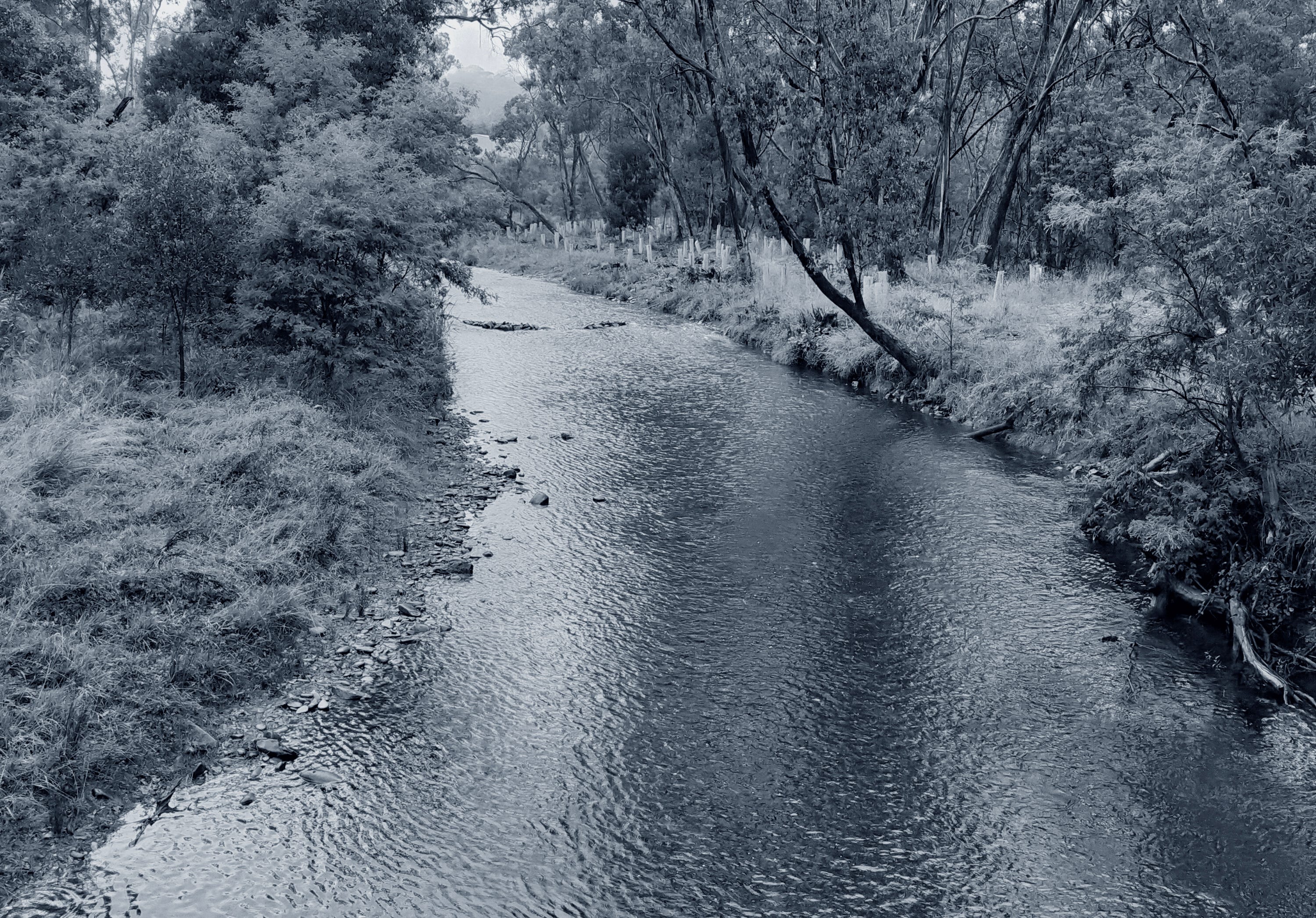
Blissfully, the Autumnal rain has come to replenish the thirsty creek. Its waters now gurgle over rocks and down drops, babbling to the ducks as it skips to the river. The river swells, scaling its forgotten banks and remembering how to rush. It roars over the weir and bounces off the walls of the canyon. With it, washes away the anxiety of summer. The bushfires are doused. The garden, saved. We breathe deeper with this change of season and exhale the heatwave that outstayed its welcome.
It had been blisteringly hot. We had camped high in the mountains to escape it, the kids running free among the wildflowers and snow gums, then on a whim we descended into a valley we hadn’t ventured into in quite some time. As the thermostat struck 40°C, we stopped to swim in Snowy Creek, a tributary of the Mitta Mitta River, and waded into a gentle bend cloaked in ferns and lomandra. The water welcomed the light, which, finding its way to the riverbed, lit a thousand flecks of fools gold like tiny stars that twinkled between comets of tadpoles. This is what a summer daze feels like: cicadas singing, heat in your nostrils and the cold caress of an alpine stream against your skin.
By the time we reached our campsite 30km downstream on the Mitta Mitta itself, something was out of sorts. The river was wild, pummeling past our tent set high on the bank above. It’s mesmerising to stand before a river that can destroy you. And discombobulating when its rampage isn’t natural. There’d been no significant rain in months, we were in the midst of a prolonged heatwave, and bushfires were but a stone throw east of us. I forbade the children from stepping a foot near it. The Mitta Mitta was running in reverse.
The river I live besides meanders in the heat of summer then swells with the rain and snow. I’m so used to its natural flow that it’s easy to forget most of the world’s major rivers live life like a tap. About 60% have been captured, dammed, and controlled. The percentage is closer to 80% in the developed world. Most rivers no longer inundate the floodplains in winter. Rather, they are held captive until summer when they are released to irrigate the crops and orchards along their banks. This reversal benefits food production and reduces town flooding, but its ecological impacts are immense. River regulation has destroyed natural wetlands, fish breeding grounds and overall biodiversity, and prevents the free movement of fish and other aqua species up and down river systems. The natural way of things has been lost.
On the Mitta, we went to see this giant tap for ourselves. We scaled its 180-metre-high rock wall and looked out across the waters of Lake Dartmouth, cradled by mountains that disappeared into the smoke haze. It’s quite an engineering feat and standing on that dam wall, you can’t help but admire our tenacity, terrible as it may be. Towns need water, after all, but there’s no way a fish could ever travel upstream here.
Humans have meddled with our river systems so immensely that it’s hard to picture how they once were. It would be wrong to assume that the 40% deemed ‘unregulated’ are natural. Mine—the Ovens River—for instance, was once the most heavily dredged river in the Southern Hemisphere; it was dug up for miles and changed course a few times. Nature has done a fine job at reclaiming it, but still, we tamper. A small concrete weir in Bright prevents the Murray Cod from travelling beyond it, and downstream, there are dams on its tributaries.
Even something as innocent as livestock will forever change a riverbank, trampling its vegetation and causing erosion. Many farmland creeks now run like deep, bare channels, though early explorer accounts often described reedy streams that spilled across the earth. Such places are exceedingly rare, remnant only in places where few humans dare to go.
It’s easy to look at nature and believe it is indeed natural. It’s harder to pause and imagine how it might have been.
Thank you for Mind Flexing with me. If you enjoyed this essay, please subscribe on Substack or your favourite podcast app, comment, click the ❤️ button, or share it with someone who would appreciate it. I’ll be back in a month. Until then, keep 💪


