


Dear friends,
I was naive to expect life to have settled by February. It hasn’t, it’s as full as ever, and this essay finds you a week later than usual because of it. But here it is. It has made it to you, hot spotting off what’s left of my phone data after my satellite internet died this morning from an unknown cause, but possibly the heatwave. In between words and school drop-offs, I’ve been running over the crunching grass to the garden to move the hose that, like an intravenous drip, does its best to keep alive the plants that have survived another week without rain. It’s the driest I’ve seen this alpine valley—it is kindling—but for now, the bushfires have gone around us. I hope all fares well in your part of the world. Let’s move beyond it though and onto this month’s essay on ‘want’. It’s a topic that piqued my interest amid the consumerism of Christmas and stayed with me as I began to observe its constant presence in our lives. Here are my thoughts. I’d love to hear yours. Enjoy!
Cheers,
Alia

I want to extend my house. I want to be able to open my bedroom door and walk around the bed without first having to close the door and squeeze inside like one of those tiny toilet cubicles in which the door attempts to touch the seat, forcing you to squish down the side of the loo to shut it. How do you get into those things?
Our two-bedroom house was fine before we added two kids to it and gave them our larger room to share. The switch served some practical purposes, one being the avoidance of child decapitation caused by a bunk bed/ceiling fan combination. I’m pleased to report the strategy is working and I’m prepared to continue squishing into my cubicle of a room to keep my children alive. But I do want to extend my house, get a larger bedroom, a wardrobe big enough for two people’s things. An office. Not so much ‘A Room of One’s Own’, as Virginia Woolf would advise—I’d feel a little selfish—but just a room with a door that closes when it needs to; a space for my computer and the books I don’t want torn.
I want these things with a side of guilt. They feel like such little luxuries. Truth be told, I don’t need them. We survive perfectly well with this roof over our heads. Needs and wants are very different beasts.
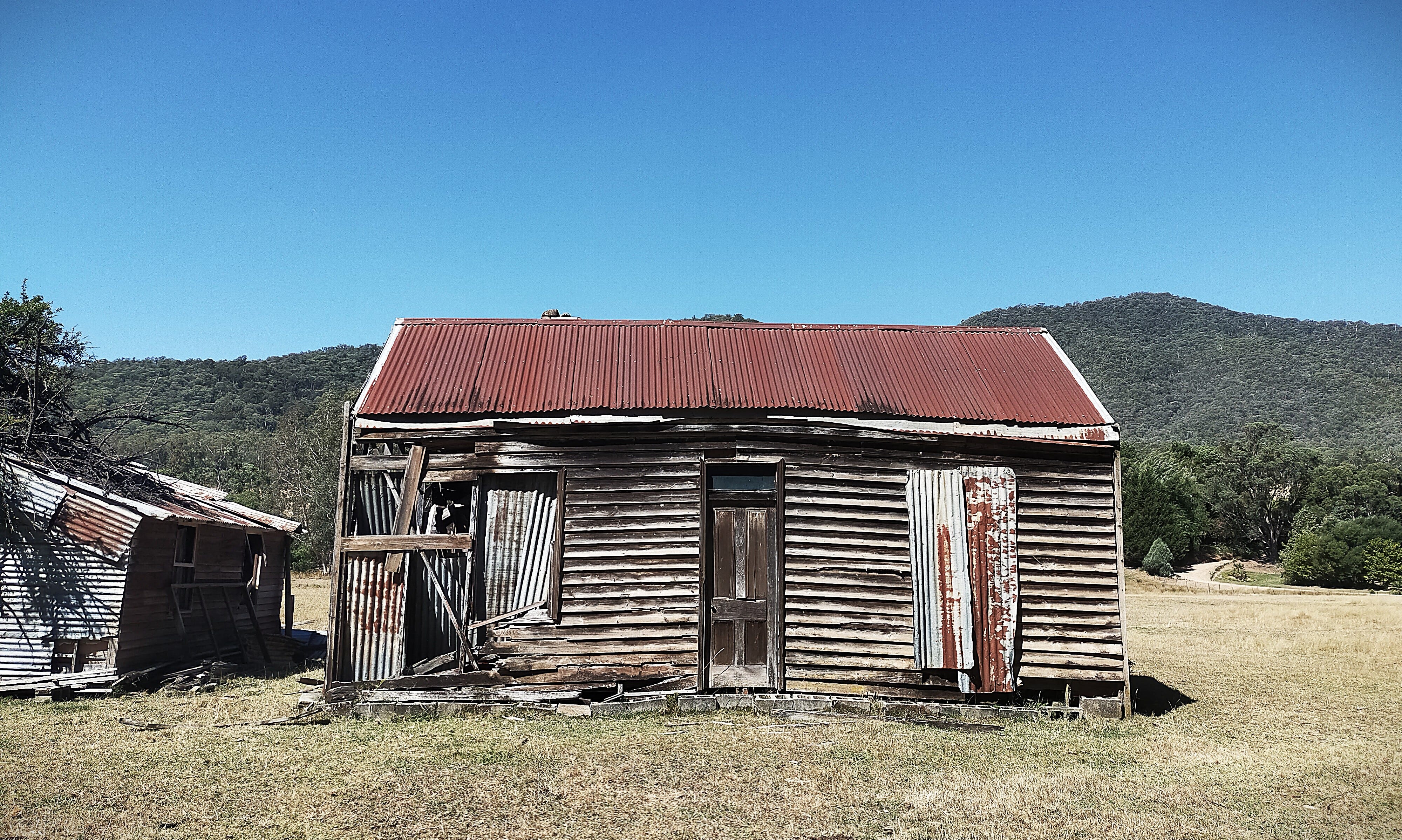
Down the road is a dilapidated cottage, likely dating back to the late 1800s. The whole cottage is about the size of my loungeroom, which is relatively modest. As recently as 30-odd years ago that little cottage was the home of Mrs Joyfeather, or Mayfeather or maybe I’ve remembered it completely wrong, but it was certainly a happy name that reminded me of the snow-capped Mount Feathertop to its south. Children in town would ride their bikes a 20km-round trip to her tiny cottage for a slice of cake. Whole families lived in such cottages and counted themselves lucky to have walls, a roof and a fireplace.
I have walls, a roof and a fireplace, and I want an office, with a big shelf of books and a window seat in which to read them. I would be the luckiest person in the world because I don’t need any of it, although working from home would certainly be more comfortable.
Lately, I’ve been observing wants. Trump wants Greenland, Canada, the Panama Canal and world domination; my kids want every toy unicorn in existence. It’s fascinating to watch my three-year-old take but a fraction of a second to mimic the wants of her older sister, clinging to these morphing desires like her life depends on it. And in some ways, it does. Want is coded into our existence. It’s an evolutionary trait that sits at the core of human life. Without want, we cease to function. It drives us, teaches us, helps us to survive, learn, and remember what works. It gives us hope. Our brains evolved to be motivated, not satisfied.
The troublesome thing about want, particularly in this modern world, is that it has no off switch.
As sure as we breathe, we will want for something, and where those wants take us has everything to do with our place in the world, our culture, environment, and ultimately, want’s best friend: dopamine.
Some people want to rule the world, others want an office. Some want power, others want to be led.
All these wants diverge so significantly, but ultimately, we all want the same thing. We want for happiness, that blissful state of contentment, which ironically, will forever evade us amid all this wanting.
Can we truly be content with what we have when we’re destined to want?
Perhaps not entirely, but we grow closer toward contentment when our wants are simplified and more closely aligned with our basic needs. In short, wanting isn’t really the problem. The problem is our tendency to fall into the trap of believing that satisfaction is always found in the next thing we want. It’s a pattern of entrapment, and an easy one to fall into in a consumerist economy.
The only way to find contentment in a life of infinite wants is through awareness. We need to be fully conscious of our wants, examine them, and be aware of what triggers our dopamine. With consciousness, we have the option to turn our focus toward the simple things in our daily lives. If we can recognise the joy in those little moments—the sunrise, the first waft of coffee before it hits your lips, children laughing, a bird singing in the rain, homemade biscuits, bedtime stories—if we can see the joy in the things we already have, we’re less likely to rely on our wants to bring happiness. We can begin to find contentment.
Having said all that, I still want to extend the house. I’d also like world peace. I am human after all.
What do you want?
Thank you for Mind Flexing with me. If you enjoyed this essay, please subscribe on Substack or your favourite podcast app, comment, click the ❤️ button, or share it with someone who would appreciate it. I’ll be back in a month. Until then, keep 💪


